ATHLETIVERSE / THE COMMERCIAL OS FOR SPORTS POWER PLAY. | | 2027 SPONSORSHIP / PART 01 OF 07 / BANKING | Everything You Need to Know for 2027 Banking Category Pitches.A $124 trillion handoff, a $750 billion jewelry box, and why finance is now the largest sponsor category in the NBA. |  | 01 / THE SETUP The money moves.
The loyalty doesn’t.Bloomberg ran a story this week with a headline that sounds like a typo: "The Great Stuff Transfer Has a $750 Billion Golden Lining." That's billion, not million, and it isn't money. It's the estimated value of the jewelry and precious metals Baby Boomers are about to hand down. The dining table, the china cabinet and the grandfather clock are headed for the estate sale. The wedding ring is not. Which got us thinking about the one industry that has the most to lose in this handoff. Banks. Cerulli's math says $124 trillion changes hands in the U.S. through 2048, with $105 trillion going to heirs. Millennials alone inherit $46 trillion. Even the skeptics' version of the number, Visa's July estimate of $36 trillion after taxes, spending and the top 1%, still works out to roughly $515,000 per inheriting household.  Here's the problem for the bank holding that money today. The heirs don't want the bank any more than they want the china. Of the investors who have already received an inheritance, only 20% kept their parents' advisor. Capgemini found 81% of next-generation wealthy heirs plan to switch firms within two years of inheriting. In April, 41% of U.S. advisors told Natixis the wealth transfer is "an existential threat" to their practice. So the biggest pool of money in American history is moving, and the people who manage it today expect to lose four out of five of the new owners. THE TAKEAWAY The money is changing hands. Banks need to earn the next generation’s loyalty before it moves. |
| 02 / THE PATTERN The handoff premium.Most loyalties don't survive inheritance. A few do. Nobody inherits their father's checking account and keeps it out of sentiment. But your dad takes you to your first game, and twenty years later you take your daughter. The team is the one inheritance almost no one sells.  Financial brands figured this out before the rest of the market did. SponsorUnited's June report put finance as the NBA's largest spending category at $318 million, "nearly double the next closest category." It's the NHL's largest category too, at more than $250 million. Financial brands hold 35% of all venue naming rights across the five major U.S. leagues, and banks own 58% of those. And 2026 was the year they doubled down. Look at what got signed in the last twelve months: Meanwhile the card issuers were raising prices, not cutting them. Chase took the Sapphire Reserve fee to $795 and bolted on a $300 StubHub credit. Amex took Platinum to $895. And it worked: the average new Platinum member is 33 years old, and Millennials and Gen Z are now Amex's largest spending cohort in the U.S. The premium "experience card" is a youth-acquisition product wearing a luxury costume. Put it together and the pattern is simple. Banks can't inherit customers, so they are buying the places where loyalty gets handed down. The gate a family walks through. The lounge a father takes his kid into for the first time. The presale that decides who's in the building at all. INVENTORY SCORECARD What financial brands actually buyRanked by how consistently it shows up in deals. 1. TV-visible venue anchor Naming, videoboard, ribbon 73% of financial naming deals include venue assets; boards and ribbons are 80%+ of components |
2. The gate & the room Cardholder entrance, lounge, presale, preferred seats Capital One, Chase, Amex, Chime, Fifth Third and Huntington all bought entrances or lounges in 2024–26 |
3. Jersey patch Fintech's entry ticket $828M/yr market; finance leads NBA patches; value is measured on social, not TV |
4. Official card / payments Cashless, tap-to-pay, card-linked offers Amex at Barclays: 10% back on concessions; Visa saw tap-to-pay +12% during the World Cup |
5. Community activation Youth, small business, financial literacy 53% of bank deals activate through community programs; it's the layer, not the purchase |
6. Standalone content series Bought on its own Rarely bought alone by banks; sells as amplification of everything above |
Ranking based on SponsorUnited category and naming-rights research (2024–2026), Zoomph patch valuations (2025–26) and deal terms disclosed in 2024–2026 announcements. Bars are directional, not spend shares. |
THE TAKEAWAY They are not paying for impressions of the game. They are paying to be standing at the door when the next generation shows up. |
| 03 / THE PLAY How to sell to
a bank in 2027.So which inventory does a bank actually want from you: hospitality, content, broadcast or the LED board? The honest answer from the deal flow is hospitality and access first, TV-visible signage second, and content as the proof layer that wraps around both. Here's how to package it. 1. Sell the door before the board. Every major bank deal signed this year included a physical threshold: Capital One's F Street entrance, Chase's east-side entrance in Dallas, the "Huntington Bank Gate" at Texas, Fifth Third's cardholder entrance in Tampa, Chime Lane in Dallas before that. Gates and entryways are already 18% of all major-asset sponsorship spend. If you have a gate, you have a bank asset. Most properties have never priced it.  2. Name the room, then gate it by card. Chase's lounge at Madison Square Garden is 4,300 square feet with a private Sapphire Reserve room inside it. Amex runs a Centurion Lounge at the US Open that you can only enter on a Resy reservation. PNC renamed the Hurricanes' entire club level. The mechanic is the same at every size: your club or suite level becomes the bank's tangible cardholder perk, and the bank gets to put "money can't buy" access into a card that costs $795 a year. Even a year-zero team with one hospitality tent can build a card-only version of it. 3. Bundle the LED. Don't lead with it. Banks still want the ribbon board and the videoboard, but they want it inside an anchor deal, which is why 73% of financial naming deals include venue assets. Sold on its own, LED is a media buy that has to compete with the bank's own $1.2 billion financial-media networks. Sold as the visible layer on top of the gate and the room, it's infrastructure. eMarketer's read on the Capital One renewal was exactly that: banks treat these deals as "long-term brand infrastructure rather than a discretionary expense." 4. Sell the patch to fintech, and sell it on social. The patch is where challenger brands enter. Robinhood holds three NBA patches, Webull took its first in Tampa Bay this year, and SponsorUnited's own read is that patches are "visually understated during broadcasts" and unlocked on digital. Robinhood's Heat patch generated 873 million social impressions last season. Chime's CMO said it plainly: "Sports. It's where a lot of cultural trends start." Price your patch on the content that carries it, not the camera angle. 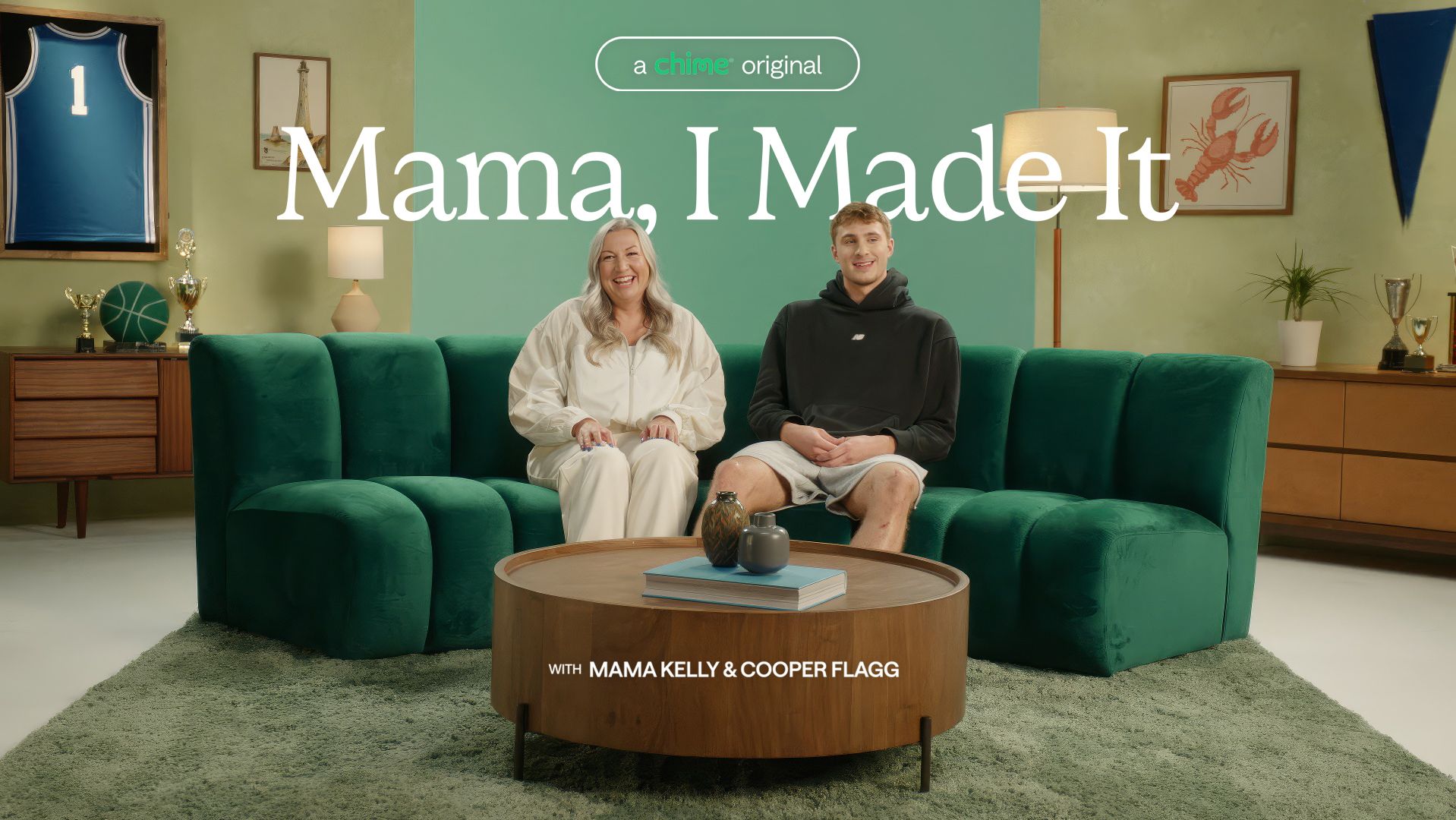 5. Report what the bank's CMO actually reports. Robinhood says its sponsorships "are not designed to drive engagement with any specific product." Chime says brand awareness nearly doubled in three years and that Dallas-area membership surged during the Mavs' Finals run. Ally says its women's-sports fans are 27% more likely to trust the brand. Notice what none of them said: impressions. The bank's board wants accounts opened, cards used in your building, and trust among people under 40. If your recap deck can show card-linked spend at your concessions and merch stands next to the exposure numbers, you are speaking the only language that gets a renewal. 6. Price it against the comps, not your follower count. A $4.7 billion credit union pays an estimated $7.5–9 million a year for an NFL stadium name. A college stadium name typically runs $1.5–4 million. An NBA patch ran Chime about $11 million a year. Regional and community banks sit underneath all of that and they are the fastest-growing new buyers in the category. If you're an emerging property, that's your list, and the ask is a flat fee for the gate and the room plus a performance kicker on the content, capped, at an agreed CPM. One more headwind worth knowing before you walk in. The Fed raised rates last week for the first time in nearly a year, and more banks are raising CD rates than cutting them. Deposits are a fight again. A bank that has to pay up for the money it already holds needs new customers who bring their own, and the cheapest new customer is one whose parents already bank there. That's a family at a game. THE TAKEAWAY Our takeaway: banks have decided the gate is the media. Properties that keep selling the scoreboard are selling the thing banks want least, at the price they'll negotiate hardest. |
| 04 / IN PRACTICE How we’re executing
this with banks.Athletiverse works with banking partners as an agency of record, which means we sit on both sides of the same deal: we bring the bank the property's inventory, and we prove back to the bank what the spend produced. In 2027 that proof has a very specific shape, because of one more number banks don't say out loud. The branch still wins. Roughly 73% of new checking accounts are still opened somewhere other than a screen, and for every account that does get opened online, 3.36 applications are abandoned. The accounts that do make it through digitally are worse: Curinos found only 41% of digitally acquired relationships are still on the books after a year, against 75% for branch-acquired ones, and after two years the digital accounts hold just 35% of the balances. About a million people walk into a Chase branch every day, and Chase says new branches drove about 40% of its deposit-share gains since 2019.  Jamie Dimon's version, relayed by a competitor's CEO on an earnings call this summer: he "loves branches because you scale them and they make $2 million a year to infinity." THE TAKEAWAY So the most valuable thing a team can do for its bank is not an impression. It's a person under 40 standing inside a branch. |
That's what we built for. With our newest AVI Commerce capability, a team's banking partner can fund a sponsored reward that lands in the fan's phone wallet and is redeemed live, in person, at the branch. The fan came for the team. The bank gets a walk-in it can convert on the spot, into the kind of account that stays. And because the redemption happens at the point of sale, every one of them is attributed back to the sponsorship, so the team can hand its bank a number that reads like a P&L line instead of a media report: fans sent, redemptions completed, accounts opened, dollars deposited. For the bank, that maximizes the lifetime value of the customer it just acquired, because it acquired them the way its own data says works. For the team, it's a tangible ROI and a point-of-sale reference it can put in front of every banking prospect in the category: proof the partnership moved people, not just eyeballs. We're running this with properties and their bank partners now, and building 2027 banking packages for the ones that don't have a bank yet. | 05 / YOUR NEXT MOVE Make your next
partnership count.Looking for point-of-sale attribution for your bank partner, or a 2027 banking sponsor? Athletiverse is the commercial OS for sports. Properties sell inventory they haven't, and prove the deals they have. $500 ATHLETIVERSE CREDIT Request more information and attend your call. You’ll automatically receive a $500 credit toward working with Athletiverse. |
| 06 / AROUND THE PORTFOLIO New partners.
Next moves.Welcome, Steel City FC. The Pittsburgh club has signed with Athletiverse through 2027. We'll be assisting with partnership development and management. Welcome, National Squash League. The NSL has signed through 2027. We'll represent its digital content selling rights, run partnership tracking, and handle post-production content. Next in 2027 Sponsorship, Part 2: Personal injury law, the loudest category on local TV and the one just discovering the jersey. | 07 / SOURCE NOTES Bloomberg, "The Great Stuff Transfer Has a $750 Billion Golden Lining" (Sep 21, 2026) · Cerulli Associates, $124T wealth transfer (Dec 2024) and heir advisor retention (Sep 2025) · Fortune on Visa Business & Economic Insights' $36T estimate (Aug 2026) · Capgemini World Wealth Report 2025 · Natixis IM 2026 Wealth Transfer Report (Apr 2026) SponsorUnited: NBA Sponsorship Intelligence Report 2025-26 (Jun 2026), NHL Report 2025-26 (Jun 2026), Financial Brands & Naming Rights (Apr 2024), Primary Jersey Patch major-assets series (2025), NBA jersey patches (Apr 2025), Banks & community activation (Feb 2025) · Zoomph NBA patch valuations 2025-26 Deal announcements: TheStadiumBusiness / Monumental (Capital One Arena, Aug 2026) · Bank of America newsroom (Panthers, Jul 2026) · Chase newsroom (Mavericks, Jul 2026; Sapphire Reserve, Jun 2025) · Dallas Morning News (Chime S-1 patch payments, May 2025) · JPMorganChase (IOC, Apr 2026) · Sportico (Ohio State, Jul 2026) · On3 (Notre Dame–SoFi, Jul 2026) · American Banker (U.S. Bank–NFL, Apr 2026; Northwest FCU, Sep 2024; de |
|
